
In his first weeks as NYC mayor, Zohran Mamdani takes a measured approach
New York City Mayor Zohran Mamdani arrives at the subway station in the Queens borough to go to City Hall in New York on January 2.
As Mamdani became mayor of New York City, supporters and detractors alike wondered how a 34-year-old democratic socialist would govern, particularly after he gave an unapologetically progressive inauguration speech in which he vowed to not “abandon my principles for fear of being deemed radical.”
But in his first weeks, Mamdani has mostly pivoted to a more careful and measured tone, embracing wins even when they don’t exactly fit his vision and holding back in moments where he might have once been more vocal.
At New York Gov. Kathy Hochul’s State of the State address, Mamdani rose to join a standing ovation when Hochul announced her funding plan for an expansion of pre-kindergarten that partly meets his campaign vision.
He remained seated when she pitched the “transformative investments” without raising taxes — something he and his base have long wanted.
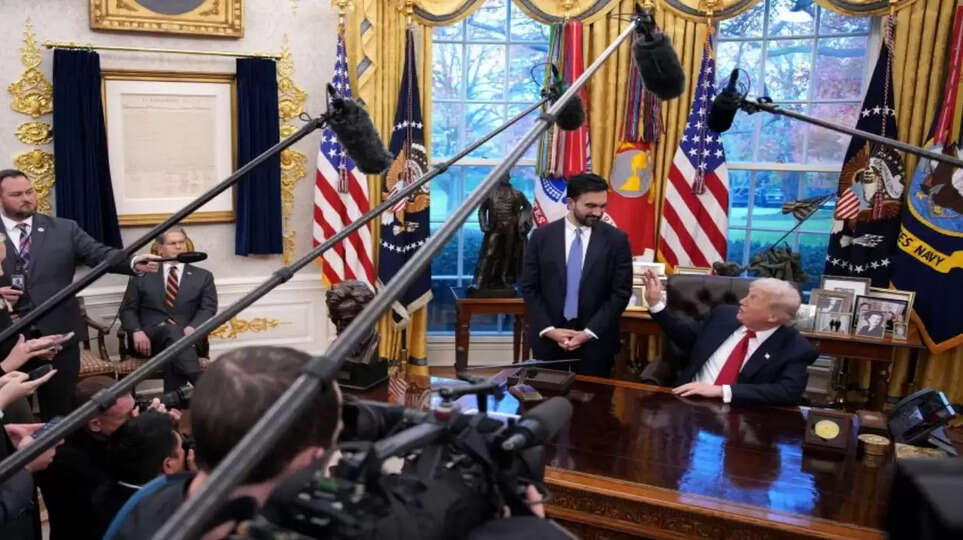
Mamdani’s texts and phone calls to President Donald Trump following their Oval Office meeting have raised eyebrows. But he’s also texting frequently with Hochul, who is among the elected leaders helping him notch early victories on his ambitious agenda.
Having entered office promising an expansion of social services and government programs, Mamdani is now facing tough budget realities that could require more compromise.
On Friday, the city comptroller released a report warning the city is facing a $2 billion deficit in the current fiscal year and a projected $10 billion gap in the coming year.
Much of Mamdani’s mayoralty so far has looked like any other. He’s held multiple events a day and made policy announcements: paving bridge ramps, installing more public bathrooms, and taking moves to cut red tape on housing construction and business.
And he and his wife, Rama Duwaji, left their rent-controlled apartment in Queens for Gracie Mansion, the official mayoral residence on the city’s tony Upper East Side.
Mamdani has been challenged early by police shootings and concerns about how he would address antisemitism, issues that he faced questions about during his campaign.
“The defining characteristic of the first weeks of this new mayor is that he course corrects very quickly,” said Trip Yang, a Democratic political strategist. “You also see him less off the cuff as mayor than he was in the campaign and that is just a function of being in City Hall.”
A defining partnership with the governor
Mamdani and Hochul are eager to move past the traditional acrimony between mayor and governor, notably during the era of Gov. Andrew Cuomo and Mayor Bill de Blasio.
(Mamdani has called de Blasio the city’s best mayor during his lifetime and vowed to never say Cuomo’s name again after beating him in November.)
Hochul enters her own reelection campaign this year facing a primary challenge from Lt. Gov. Antonio Delgado.
She has sought to focus on affordability and child care as Mamdani did during his campaign while also warning against income tax hikes — and taken some booing and heckling from Mamdani supporters as a result.
Hochul’s plan expands free and low-cost child care for families across New York, building an on-ramp for one of Mamdani’s most ambitious proposals to offer universal child care to every child 6 weeks to 5 years old in New York City.
Political observers and lawmakers, including some who are close with Mamdani, said they do not expect him to back off from his proposal to tax wealthy residents.
A group of democratic socialists in the state legislature have already made taxing the rich their primary goal as a new legislative session kicks off.