
Claudette Colvin, civil rights pioneer, dies at 86
Claudette Colvin, whose refusal to move to the back of a Montgomery, Alabama, bus as a teenager preceded the better-known efforts of Rosa Parks by less than a year, has died. She was 86.
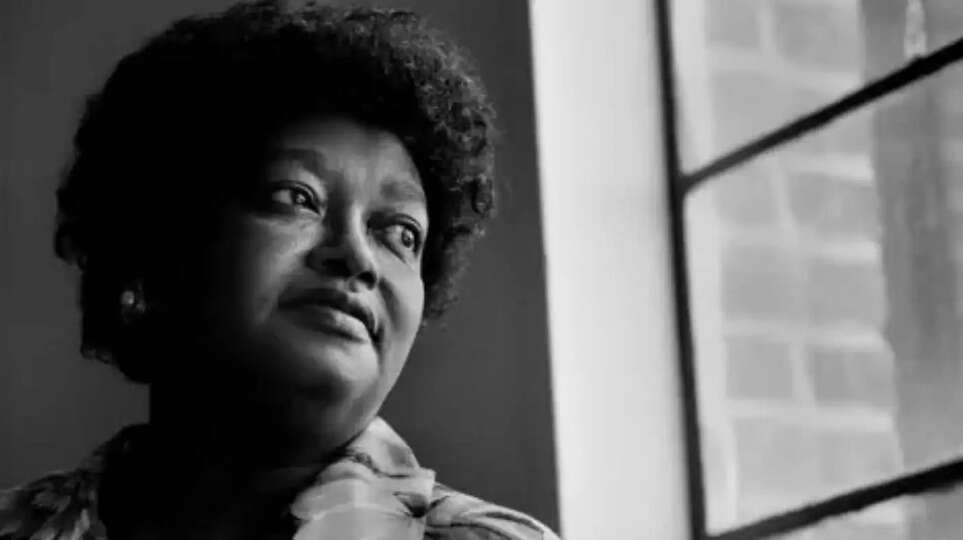
"It is with profound sadness that the Claudette Colvin Foundation and family announce the passing of Claudette Colvin, a beloved mother, grandmother, and civil rights pioneer," the foundation and family said in a statement posted on Facebook. "She leaves behind a legacy of courage that helped change the course of American history."
Colvin died of natural causes in southeast Texas near Houston, said Ashley Roseboro of Roseboro Holdings, a Washington, D.C.-based management and community engagement firm that represents the Colvin family.
Montgomery Mayor Steven L. Reed said Colvin's life "reminds us that movements are built not only by those whose names are most familiar, but by those whose courage comes early, quietly, and at great personal cost."
A 15-year-old takes a stand
It was on March 2, 1955, that Colvin, then a 15-year-old, bespectacled honors student at Montgomery’s Booker T. Washington High, stepped onto a City Lines bus in Montgomery. She recalled wearing a light blue sweater and a navy blue skirt.
Remembering those we lost: Celebrity Deaths 2026
Later, her mother would say that on any other day, events might have played out differently, but that as it turned out, fate picked the wrong day to test her daughter.
Colvin would explain that she'd just spent February studying Black history and learning about injustices throughout the South in school, and that those thoughts played in her head as she boarded the bus that day.
Montgomery’s segregation laws dictated that White people sat in front and Black people in back, with a "no man’s land" of seats between the two groups. Colvin was seated in the "no man’s land" when a group of White passengers boarded.
The teen refused to comply when the driver asked her to move to the rear.
"I felt as though Harriet Tubman was pushing me down on one shoulder and Sojourner Truth was pushing me down on the other," she said. "So, therefore, history had me glued to the seat. That was the reason I could not move."
Eventually, several police officers boarded the bus too, but Colvin still refused to budge.
Claudette Colvin is pictured at Booker T. Washington Magnet High School in Montgomery, Alabama, on Feb. 3, 2005
Colvin was dragged off the bus, handcuffed, and charged with assault and battery, disorderly conduct, and violating city segregation laws. Most of the charges were dismissed, but a juvenile court judge found Colvin guilty of assault, and she was made a ward of the state and placed on indefinite probation.
"It was difficult because people looked at me differently," Colvin said. "The people who didn’t know me said that I was crazy. Some of the parents didn’t want their children to be associated with me."
Fred Gray, the young civil rights lawyer who would ultimately take the fight against Montgomery’s segregation laws to the United States Supreme Court, lauded the teen's courage in the growing fight for civil rights.
"(You had) a 15-year-old girl who did what she did, and was willing to take whatever consequences, not knowing what was going to happen," he said. "Claudette had a lot more courage than many of us involved."
Gray and others hoped to challenge Montgomery’s segregation laws in court, but with Colvin's segregation violation charge dismissed, the choice was made to wait until a stronger case emerged.
Legacy and long-awaited relief
In 1956, Colvin was one of four Black women who were plaintiffs in Browder v. Gayle, which successfully challenged Montgomery's segregated bus seating as unconstitutional, transforming public transportation of all types across the country.
Colvin would leave the South after the assassination of Martin Luther King Jr., moving to New York, where she spent years as a nursing aide. Laws changed; so did society, and in 2019, the Montgomery street where she once lived was renamed Claudette Colvin Drive.
But the "indefinite probation" to which she’d been sentenced hung over her head like a cloud.